


Booking a ski holiday comes down to a handful of decisions made in the right order. First, when to go and how much to spend. Then where to stay and how to get there. Finally, the extras: lift passes, ski hire, lessons and insurance.
We’ve been running chalet holidays in Meribel for more than 25 years. Here’s how to book a ski holiday step by step, with the timings, typical costs and tips we share with our own guests.
If it’s your first time on skis, our guide to skiing holidays for beginners covers what to expect from your first week on the mountain.
Your ski holiday booking timeline
| When | What to book or sort |
|---|---|
| 9 to 15 months before | Choose your dates, resort and accommodation, and pay your deposit. Peak weeks (Christmas, New Year, February half term and Easter) go first. |
| As soon as you’ve booked | Buy winter sports insurance, so you’re covered if you need to cancel. |
| 6 to 9 months before | Book flights or trains and airport transfers. Check everyone’s passports. |
| 3 to 4 months before | Book ski lessons and childcare, especially for school holiday weeks. |
| At least 10 weeks before | Pay your balance. Pre-order lift passes and ski hire. |
| 6 to 8 weeks before | Start some ski fitness exercises. |
| 2 to 4 weeks before | Pack, sort your money and cards, and book restaurants and activities. |
| The week before | Check the snow forecast and your final travel details. |
Already know when you want to go? Check chalet prices and availability. You can hold a chalet free of charge for 48 hours while your group decides.
Step 1: Decide when to book
Most people book 9 to 12 months ahead, and earlier for peak weeks. Booking early secures the dates, accommodation and extras you want, especially if you’re tied to school holidays or travelling as a group.
Accommodation for the next season usually opens around February of the current one. That means you can book up to 15 months ahead if you’re planning an April trip. Some of our most popular chalets are already around 50% booked for next season by the time the current one ends.
If you’re travelling outside peak periods, you can often book just a few months ahead. This gives you more flexibility and sometimes access to special offers. Early and late season weeks aren’t only good value; they often bring fresh snowfall and much quieter slopes too.
Step 2: Set your budget
Accommodation is usually the biggest cost, followed by travel, lift passes and spending money. Here’s a rough guide per person for a 7-night trip to Meribel:
| Cost | Typical range per person |
|---|---|
| Accommodation (7 nights) | £500 to £1,500 |
| Flights and transfers | £150 to £400 |
| Lift pass | £200 to £300 |
| Ski or snowboard hire | £100 to £150 |
| Ski lessons (group or private, several sessions) | £235 to £550 |
| Winter sports insurance | £30 to £50, plus €3 to €5 a day for optional Carré Neige cover |
| Spending money | £300 to £1,000 |
That adds up to roughly £1,500 to £4,000 per person for a week, depending on when you go, where you stay and how often you eat out.
It’s worth looking at value rather than headline price. A resort or chalet that looks expensive can work out cheaper once you add up what’s included. For example, a catered chalet includes breakfast, afternoon tea and evening meals, while food and drink in ski resorts often costs more than at home.
Money-saving tips
- Book early for the best choice, or watch for late offers if your dates are flexible.
- Travel outside school holidays and the Christmas and New Year weeks where you can.
- Travel as a larger group. The total cost splits further, so the price per person often drops.
- Look for providers who can offer discounts on lift passes, ski hire and lessons.
- Hire your ski equipment rather than buying until you’re sure you’ll keep going back.
For more ideas, see our guide to affordable ski holidays.
Step 3: Decide who’s going
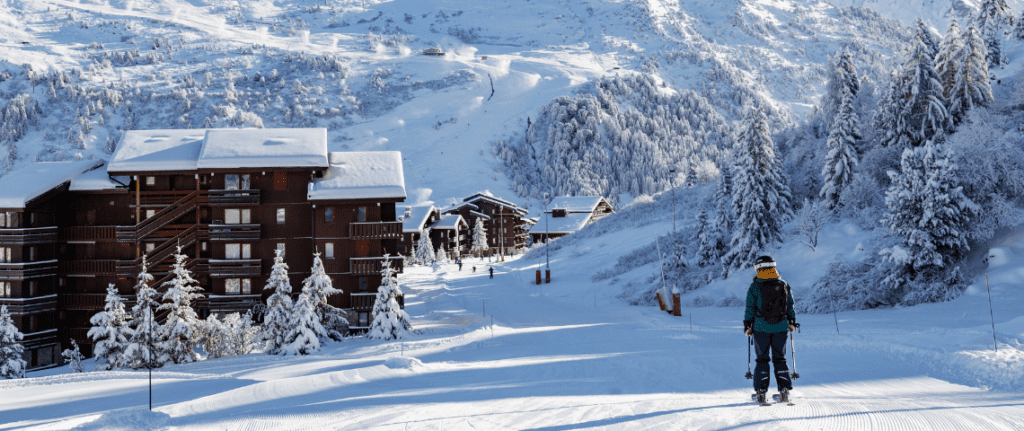
Who you travel with shapes almost every other decision. It affects the size and type of accommodation you need, which weeks work, and which resort suits everyone.
A few questions to settle early:
- How many people? Larger groups usually pay less per person, and may need a big chalet or two close together.
- What abilities? A mix of beginners and confident skiers needs a resort with good nursery slopes as well as plenty of challenging runs.
- Any non-skiers? Check there’s enough to do off the slopes.
- Any children? You’ll need to think about school holidays, ski school and childcare.
If you’re organising for friends or several families, our guide to how group ski holidays work explains how booking works for a group.
Step 4: Choose your dates
The ski season in the Alps runs from early December to late April, and each month has a different feel. If you have children at school, you’ll be tied to the school holidays. Otherwise you have more freedom to pick quieter, better-value weeks.
The snowfall figures below are Meribel’s historical averages, based on our own records.
Skiing in December
Early December means quiet slopes, fresh snow and some of the best-value weeks of the season.
Late December brings the Christmas and New Year weeks. Expect festive cheer across the resort, and in Meribel a Christmas Eve parade, carol singing and a torchlit procession at La Chaudanne. New Year’s week is just as special: there are few better ways to see in the new year than by the fire after a big day on the slopes. These are among the busiest and priciest weeks, so book early. See our guides to skiing at Christmas and Christmas and New Year in Meribel.
Skiing in January
Once the Christmas crowds head home, January is one of the quietest months on the slopes. It’s a great time to explore the 600km of the Three Valleys with barely any lift queues. Meribel averages around 12 days of snowfall in January, mixed with crisp, sunny days.
Skiing in February
February half term is one of the most popular weeks for family ski holidays, so the slopes are busier. In return you get lots of entertainment for children, and usually a good mix of snow and blue skies. Meribel averages around 11 days of snowfall in February.
Once the half term weeks are over, the slopes quieten again and longer, sunnier days bring the first feel of spring.
Skiing in March
March is spring skiing at its best: longer days, milder temperatures and relatively quiet slopes outside the holiday weeks. Meribel still averages around 11 days of snowfall, so conditions stay good.
It’s also the liveliest month for après ski, with a busy calendar of events and live music. Read more in our guide to skiing in March.
Skiing in April
The Easter holidays make April another popular month for families. It suits a slower pace, with early starts, long lunches in the sun and après on the terrace. Don’t be put off by the warmer weather: Meribel still averages around 10 days of snowfall in April, so powder days are still possible.
Skiing in the school holidays
Each school holiday has its own advantages:
- Christmas and New Year: festive magic and special family time, with slopes often quieter than half term. These tend to be the most expensive weeks.
- February half term: usually the most popular choice, with good snow, more sunshine and lots of activities for children. It’s busy, so a large ski area with a modern lift system makes a real difference to queues.
- Easter: often the best-value school holiday of the season, with long sunny days. It can still be busy, so bear this in mind when choosing a resort.
Whichever you choose, book as early as you can. School holiday weeks are the first to sell out, along with ski lessons and childcare.
Step 5: Choose your resort
The right resort depends on who’s going and what you want from the week. Once you know your group and dates, compare resorts on:
- Size and variety of the ski area: enough runs for every ability, from nursery slopes to challenging reds and blacks.
- Altitude and snow record: higher resorts and good snowmaking give more reliable conditions early and late in the season.
- Lift system: modern, fast lifts keep queues down in busy weeks like February half term.
- Transfer time: a short transfer from the airport means more time on the slopes.
- Getting to the slopes: how easy it is to reach the lifts from where you’ll stay.
- Life off the slopes: restaurants, shops, après ski and activities for non-skiers.
Why we think Meribel ticks the boxes
We may be biased, but Meribel suits almost every kind of group. It sits at the heart of the Three Valleys, the largest connected ski area in the world, with over 600km of pistes. There are dedicated beginner areas for anyone building confidence, and enough variety to keep experienced skiers busy for years.
Off the slopes, the resort has a charming village centre with independent shops and restaurants, a lively après scene, and plenty of things to do for non-skiers. Transfers from the main airports are also relatively quick (see step 7).
Step 6: Choose your accommodation
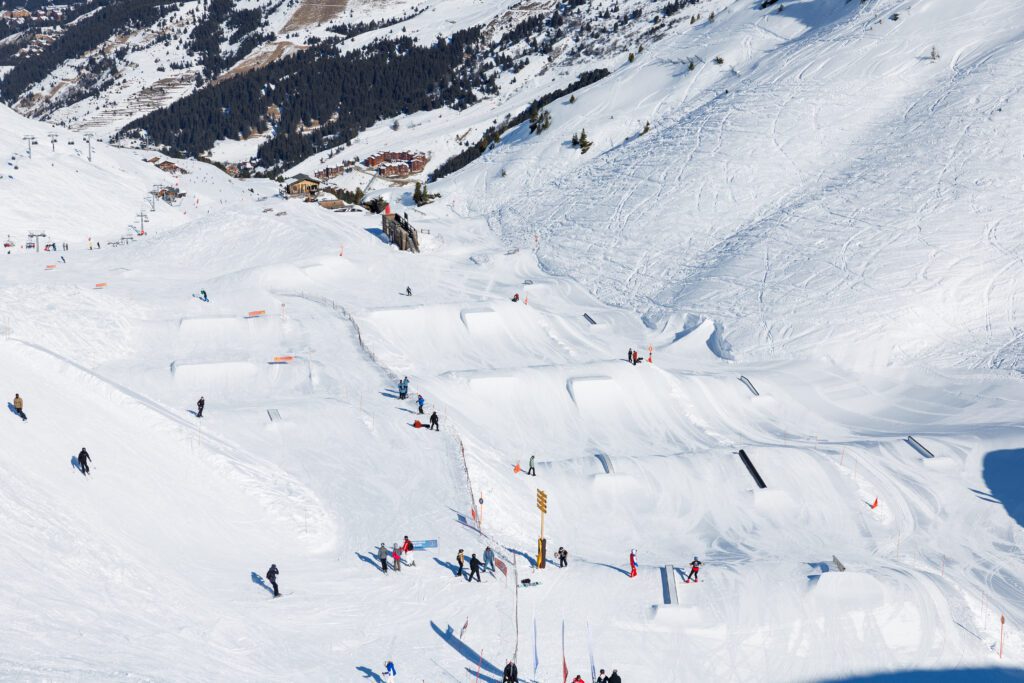
Finding the right accommodation can feel like the hardest part of booking a ski holiday. There are hotels, apartments and chalets, and a choice of catering options for each. It gets much simpler once you know what matters most to your group.
Catered or self-catered
Whether meals are included makes a big difference to both the feel and the cost of your trip.
A catered chalet takes care of breakfast, afternoon tea and evening meals, plus housekeeping, so you can focus on skiing. People are often surprised that catered can work out better value than self-catered. That’s especially true if you’d otherwise eat out most nights, as food and drink in ski resorts often costs more than at home.
Self-catering gives you more flexibility if you want to try local restaurants or cook for yourselves. It can suit families with specific dietary needs or groups who like to set their own schedule.
At Ski Basics we offer both. Our catered Meribel chalets come with hearty breakfasts, freshly baked afternoon tea and home-cooked evening meals. Our self-catered Meribel chalets have the same locations and standards, with optional extras you can pre-order. You can compare what’s included in each experience.
Location: ski-in ski-out, village centre or somewhere quieter
Where you stay in Meribel shapes your week, and long journeys to the lifts soon become a drag, especially with children.
- Ski-in ski-out chalets let you step onto the slopes in the morning and ski back at the end of the day, with no carrying skis or catching buses.
- Meribel Centre puts you close to the shops, restaurants, bars, ski schools and hire shops.
- Meribel Village is quieter, with direct access to the slopes and local amenities.
If you’re not staying ski-in ski-out, our in-resort drivers can take you to the slopes or ski school in time for first lifts and lessons.
Space and flexibility
You won’t spend much time in your bedroom on a ski holiday, but shared space matters. A chalet gives you your own living and dining areas and the freedom to make the place your own. That suits families who want room for the children, and groups who want to spend evenings together.
Browse our Meribel chalets and check availability.
Step 7: Book your travel and transfers
Most people fly, but you can also drive or take the train. Whichever you choose, book early for the best prices, especially for school holiday weeks.
Flying
Meribel is served by Geneva, Lyon, Grenoble and Chambéry airports. Flight choice and transfer times vary depending on where you fly from, so it’s worth comparing more than one airport.
Airport transfers
Transfers to Meribel take around 1 hour 15 minutes to 2 hours 30 minutes, depending on the airport. Book them when you book your flights.
- Private transfers: the most flexible and convenient option for families and groups. Typically €300 to €500 each way per vehicle, depending on group size and airport.
- Shared transfers: better value for couples and smaller groups. Usually from around €60 to €90 per person each way.
- Public transport (train, bus or coach): generally the cheapest, but slower and often with extra connections.
Your chalet manager can help arrange transfers to match your flights.
Driving
If you’re driving to the Alps, decide whether to cross by Eurotunnel or ferry, and make sure your car is equipped for mountain roads, including snow tyres or chains. Once you’re in Meribel, local buses and shuttles mean you won’t need the car to get around.
For every option compared, read our guide to getting to Meribel from the UK.
Step 8: Check passports and travel documents
Check everyone’s passport as soon as you book, not the week before you travel. The rules for UK travellers have changed in recent years.
- Passport validity: for France and the rest of the Schengen area, a UK passport must be less than 10 years old on the day you enter, and valid for at least 3 months after the day you plan to leave.
- The 90/180-day rule: UK travellers can spend up to 90 days in any 180-day period in the Schengen area without a visa.
- Entry/Exit System (EES): the EU’s new digital border system has been fully running since 10 April 2026. It replaces passport stamps. The first time you cross, your fingerprints and a photo are taken at the border, so allow extra time. For Eurostar, Eurotunnel and Dover, French border checks happen before you leave the UK.
- ETIAS: the EU plans to introduce an online travel authorisation for UK visitors, costing €20 and valid for 3 years. It isn’t live yet and no start date has been confirmed. When it launches, apply only through the official EU website, not a third-party site.
- Health cover: take your GHIC (or valid EHIC) for state healthcare in France. It doesn’t replace travel insurance (see step 12).
- Non-UK passports: check whether you need a visa for France.
Rules can change, so always check the latest GOV.UK travel advice for France and the EU’s official EES guidance before you travel.
Step 9: Book your lift passes
Buying lift passes before you arrive saves queuing on your first morning, and can save money too. Look out for discounts for children, seniors and families.
Choose the pass that matches how far you’ll ski. Beginners may only need a local area pass while they learn, while confident skiers will want the full Three Valleys pass. When you buy, you can add Carré Neige insurance for a few euros a day, which covers rescue and medical assistance on the slopes.
When you stay with Ski Basics, your chalet manager can arrange your lift passes before you arrive.
Step 10: Reserve your ski or snowboard hire
If you’re hiring equipment, sort it when you book the rest of your holiday. Pre-booking is especially important in school holidays, when popular sizes and beginner packages sell out.
You’ll usually need skis or a snowboard, boots, poles and a helmet. Most resorts have several hire shops, so ask your accommodation provider for a recommendation or check online reviews. Many shops can deliver equipment to your chalet, or you can pre-book and be fitted in the shop when you arrive.
Ski Basics guests get exclusive discounts at some of the best hire shops in Meribel. See our Meribel ski hire page for details. Thinking of buying your own kit instead? Read our guide to buying vs renting ski equipment.
Step 11: Book your ski lessons
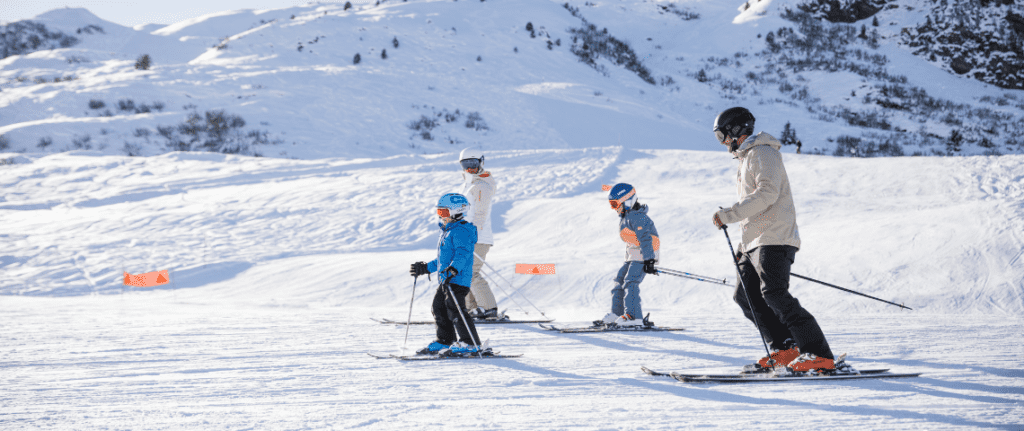
Book lessons well in advance, especially in school holidays, to get the times and instructors you want. Group lessons are sociable and good value; private lessons give one-to-one attention and faster progress.
Ask your accommodation provider which ski schools they recommend. We work closely with several of Meribel’s schools, and you can compare them on our Meribel ski schools page.
Step 12: Get winter sports insurance
Buy your insurance as soon as you’ve booked, so you’re covered if you need to cancel. Standard travel insurance often excludes skiing, so check your policy covers winter sports, including mountain rescue and medical treatment for ski injuries. If you plan to ski off-piste, check that’s covered too.
Carry your GHIC as well, and consider adding Carré Neige to your lift pass for extra on-mountain cover. Find out more on our winter sports insurance page.
Step 13: Book childcare (if you’re skiing with children)
Holidays are precious, and a few hours of childcare mean the adults get some time on the slopes together too. Most resorts have childcare and kids’ ski school, but places fill up quickly in school holidays, so book as early as you can.
At Ski Basics we work with a small selection of Meribel’s most reputable childcare providers, and you can pre-book childcare and baby equipment before you arrive. Our in-resort drivers also make ski school drop-offs easy. Find out more on our families and children page and in our guide to skiing with children.
Step 14: Plan activities, restaurants and après
There’s more to a ski holiday than skiing. Look at what’s on offer off the slopes before you go, and book popular restaurants ahead, especially in peak weeks.
In Meribel there’s plenty to do for skiers and non-skiers alike, including spas, an ice rink, snowshoeing, swimming and sledging. See our guide to things to do in Meribel. For lunch stops and evenings out, read our pick of the best restaurants in Meribel and our guide to après ski in Meribel. Your chalet manager can also recommend places and make reservations for you.
Step 15: Work out what to pack
Make your packing list a few weeks before you go, so there’s time to buy or borrow anything missing. The essentials:
- Waterproof ski jacket and trousers
- Thermal base layers and mid-layers
- Ski gloves, hat, neck warmer and ski socks
- Goggles and sunglasses
- Helmet (you can hire one)
- Sun cream and lip balm
- Comfortable footwear and casual clothes for the evenings
Travelling with children? Pack a few games or books for quiet evenings in the chalet.
For the full list, use our ski holiday packing checklist and our guide to what to wear skiing.
Step 16: Sort your money
Almost everywhere in the Alps now takes card payments, including most mountain restaurants. The easiest way to avoid fees is a bank card or prepaid travel card with no foreign transaction charges. It’s still worth carrying a few euros for tips and the odd cash-only purchase.
Step 17: Get ski fit
You don’t need to be an athlete to enjoy a ski holiday, but even a short day on the slopes works muscles you rarely use. Starting some simple exercises 6 to 8 weeks before you go makes the week more enjoyable and lowers the risk of injury. Try our ski exercises to prepare for your ski holiday.
Step 18: Check the weather forecast
In the week before you go, keep an eye on the forecast. It’s a great way to build excitement and helps you plan your week, from the best day for a long tour of the Three Valleys to the sunniest afternoon for après on a terrace.
Good places to check include Snow-Forecast.com, AccuWeather and our live Meribel webcams.
How booking with Ski Basics works
Booking a chalet holiday in Meribel with us takes seven simple steps:
- Explore our chalets and prices and availability, or contact the team to talk through dates, group size and what you’re looking for.
- Choose your chalet. You can hold it free of charge for 48 hours while your group decides.
- Pay a £150 per person deposit to secure your booking.
- Let us help arrange transfers, lift passes, ski hire and lessons. Everyone in your group gets their own MySkiBasics login to see bookings and options.
- Pay the remaining balance at least 10 weeks before you arrive. Each person can pay their own share through MySkiBasics, so one person doesn’t have to collect everyone’s money (unless you’d prefer to).
- Receive your pre-departure information so you know exactly what to expect.
- Arrive in Meribel, where your chalet host or manager will welcome you.
Cancellations
We understand plans can change. We offer flexible cancellation policies where possible, but can’t guarantee a refund or change of dates, which is why we always recommend taking out insurance when you book. Full payment and cancellation terms are set out when you book.
What our guests say
Don’t just take our word for it. Here’s what some recent guests said about their stay (read more reviews):
“Another wonderful skiing holiday with Ski Basics in a great chalet with service to match! Thanks to our hosts Alice and Oli and Hattie, our manager, who provided lots of helpful information and met all our requirements with a friendly manner. Also thanks to Cheryl in the back office who patiently nursed through every enquiry leading up to our memorable stay.”
Luess Espley, Chalet Arbalete, March 25
“Finn & Jacob were brilliant as were all the other Ski Basics staff we came across. Finn’s cooking was excellent & he made so much effort to provide Gluten Free food for me, which was all delicious. The chalet was very comfortable and clean and the cleaning staff who came in daily were really thorough & our kids loved the scenes put together using their teddies. We had a wonderful time and will definitely be using Ski Basics again.”
Tori Griffiths, Chalet Victoire, Dec 25
“The chalet was a great size and location for our family. We enjoyed the hot tub after a big day skiing. Host Olivia was incredible and went to so much effort to make our stay so enjoyable. The taste and presentation of the food was amazing and such a treat to be spoilt with beautiful food each day. She is a great chef! She had lots of local knowledge about the best ski runs and places to go and explore. A very special week with the family. Thank you!”
Jo Moore, Chalet Lapin, March 25
Ready to book your ski holiday?
Now you know the steps, the best advice we can give is to start early, especially if you’re travelling in the school holidays or organising a group.
Check chalet prices and availability for this season, or talk to the Ski Basics team. We’re here to help at every step.
- UK office (Monday to Friday, 9am to 5pm): 01225 614668
- French office (weekends): +33 479 003 994
- Email: info@skibasics.co.uk
- Web form: contact us online
Follow us on Instagram for last-minute deals and updates through the season.
FAQs: how to book a ski holiday
How far in advance should I book a ski holiday?
Ideally 9 to 12 months ahead, and earlier for Christmas, New Year, February half term and Easter. Bookings for the next season usually open around February, so you can book up to 15 months ahead. Large groups should book as early as possible, as popular chalets can be around half booked before the current season ends.
When is the cheapest time to go skiing?
Outside the school holidays. Early December, January after the New Year week, and the weeks either side of February half term and Easter usually offer the best value, with quieter slopes and shorter lift queues.
How much does a ski holiday cost?
As a rough guide, a week in Meribel costs around £1,500 to £4,000 per person. That covers accommodation, travel, lift pass, hire, lessons, insurance and spending money. Your dates, accommodation and how often you eat out make the biggest difference. See the full breakdown in step 2.
Should I book lift passes, ski hire and lessons in advance?
Yes, especially in school holidays. Booking ahead secures the lesson times and equipment you want and saves time on arrival. Lift passes bought in advance can also be cheaper.
What do UK travellers need to ski in France?
A passport that’s less than 10 years old on the day you enter and valid for 3 months after you leave, winter sports insurance and your GHIC. Since April 2026, the EU’s Entry/Exit System records your fingerprints and photo the first time you cross the border. ETIAS isn’t live yet; check GOV.UK before you travel for the latest rules.
Is a catered chalet better value than self-catered?
Often, yes. Self-catered chalets usually cost less upfront, but eating out and buying food in a ski resort adds up quickly. A catered chalet includes breakfast, afternoon tea and evening meals, so the total cost can end up lower.
Can we book multiple chalets close together?
Yes. If your group is too big for one chalet, you can often book several close together, especially if you book early. Chalet Chamois, Chalet Brenettes and Chalet Lapin work well for larger groups, and our team can suggest the best combination for you.
Are your chalets suitable for families with young children?
Yes. Many of our chalets are family-friendly, and you can pre-book childcare and baby equipment. Our in-resort drivers make ski school drop-offs easy, catered chalets take away the meal planning, and your chalet hosts are on hand throughout. Read more about skiing with young children.